The Sonoran Desert National Monument contains magnificent examples of untrammeled Sonoran Desert landscape. The monument sits in the most biologically diverse of the North American deserts and captures a significant portion of that diversity. The most striking aspect of the plant community in the monument is the extensive saguaro cactus forest. The monument contains three distinct mountain ranges, the Maricopa, Sand Tank and Table Top mountains, as well as the Booth and White hills, all separated by wide valleys. The monument also contains three congressionally designated wilderness areas, archaeological and historic sites, and remnants of several important historic trails.
Hours and Seasons
The monument is open 24 hours a day, year-round. It's best to enjoy the monument from late October to mid-April to avoid summer heat.
Places to Go
Getting Around
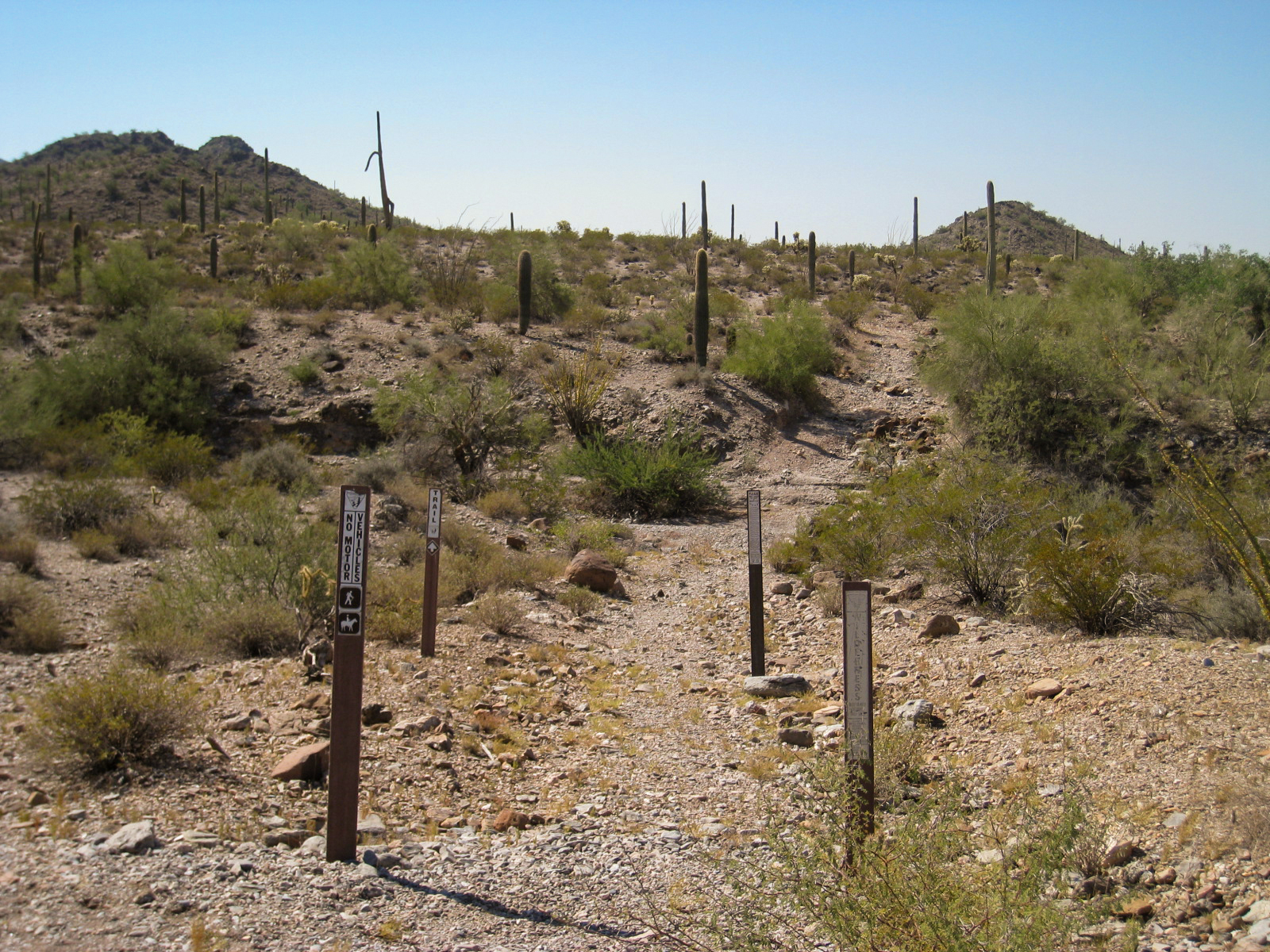
Interstate 8 and State Route 238 cross the monument. Most other roads are unpaved, primitive, and not maintained. High-clearance or four-wheel-drive vehicles are recommended in some areas. More than 460 miles of posted roads are available for back country, off-highway vehicle driving and mountain biking; however, by law, vehicles and bicycles are prohibited in wilderness.
Camping
Camping on Public Lands
Dispersed Camping
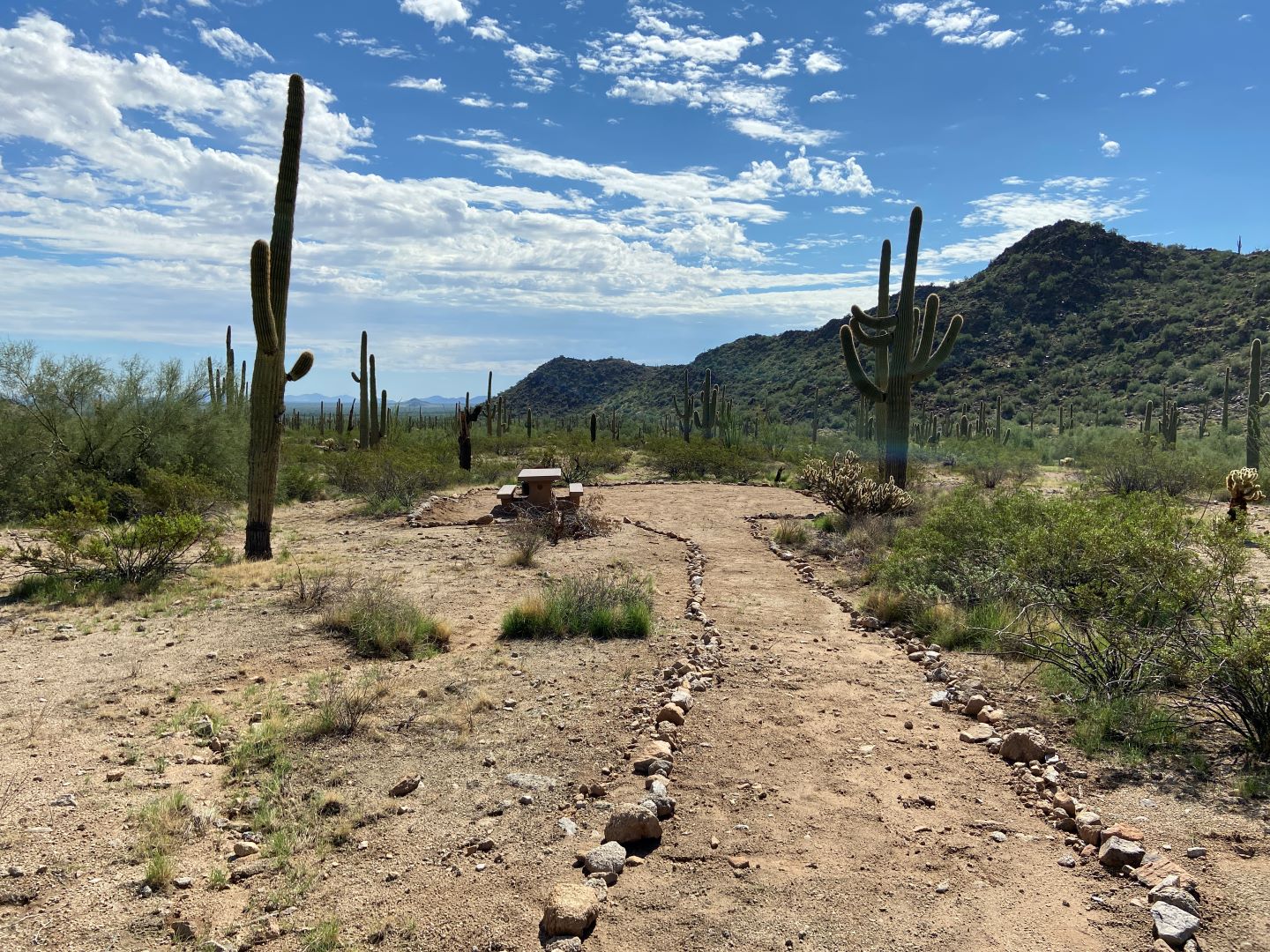
- Dispersed camping and picnicking is allowed throughout the monument, unless otherwise posted. Desert camping allows visitors to take short scenic hikes, survey unique vegetation, and relax with friends under a blanket of stars.
Campgrounds
Your Safety
This is a remote area and access roads are not maintained. Cell phones do not work in many areas of the monument.
Heat and Sun
The monument's elevation ranges from 1,000 to 4,400 feet, so summer is rough on visitors. It's best to enjoy the monument from late October to mid-April. If you are visiting in summer, take extra precautions to drink plenty of water, as temperatures may exceed 110°F. We recommend sunscreen, sunglasses and a hat. Weather forecast
Water
Bring all the water you will need. There is no drinking water available on the monument. Plan on drinking one gallon (4 liters) per person per day—more if you're engaged in strenuous activities.
Your vehicle
Make sure your gasoline tank is full, carry additional water and full-size spare tires in your vehicle, and make sure your vehicle is in good working condition. Winter is the most popular time to visit.
Wildlife
The desert sun stirs up rattlesnakes and other reptiles as early as February.
Flash floods
Flash floods caused by sudden storms can be dangerous in washes, so it is best to have a survival plan to prevent emergency situations. Have good maps with you and know how to use them.
Border Concerns
The southern part of the monument is a corridor for drug and human smugglers. Be alert for illegal activities and law enforcement operations.
The area is home to many species of wildlife. Please remember to practice outdoor ethics and recreate responsibly. Help us protect this unique environment by leaving no trace during your visit.
Check for fire restrictions before your visit. Using exploding targets, fireworks, sky lanterns, tracer ammunition and other incendiary devices is prohibited on BLM-managed public land in Arizona.
 Camp Observer